Hidden Damage After an Accident and Why Estimates Grow
The first estimate is based on what can be seen from the outside. Once the shop takes parts off, more damage often turns up, and the estimate grows through a supplement. Here is why that happens, how to spot hidden damage yourself, and how to keep the process fair.
Key takeaways
- A first estimate covers visible damage. Teardown finds the rest: crushed absorbers, bent brackets, damaged sensors and wiring. The shop adds it on a supplement.
- Supplements are normal. CCC data shows the share of claims with a supplement rose in 2025, and in early 2026 more than half of sensor calibrations were added after the first estimate.
- Watch for signs after a crash: doors, hood or trunk that will not close properly, pulling or steering changes, new warning lights and fluid leaks.
- In North Carolina, supplements count toward the 75% total-loss line, and no one may agree to hold repairs down to stay under it.
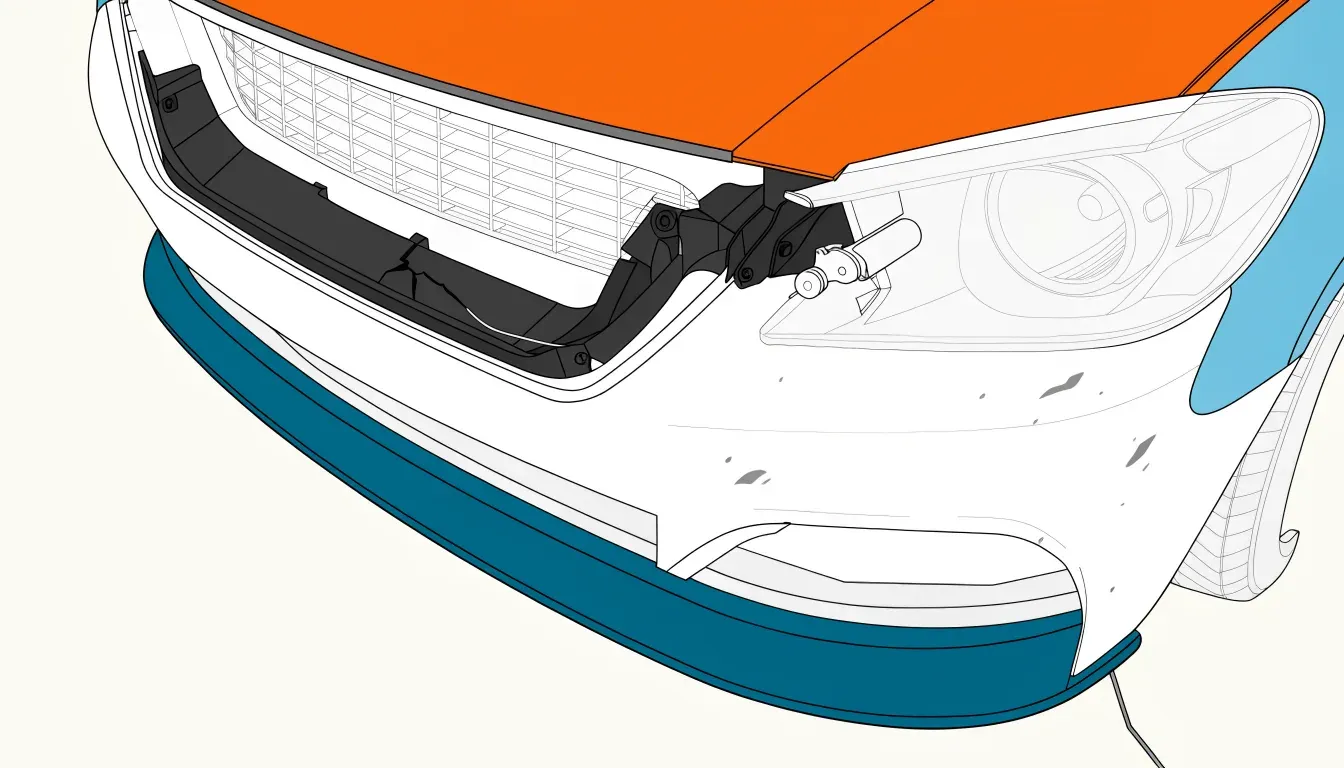
Hidden damage after a car accident is damage you cannot see from the outside: crushed energy absorbers behind the bumper, bent brackets and reinforcements, damaged sensors and wiring, and sometimes structural damage. It is the main reason collision estimates grow. The first estimate covers what is visible. Once the shop takes parts off, it writes a supplement for what it finds. That is normal, and data from CCC Intelligent Solutions shows supplements are part of a large share of repairs.
Auto Body Wilson is an independent guide, not a repair shop. Every figure and rule below is linked to its source.
Why the first estimate is incomplete
An estimator writing the first estimate sees the outside of the car. A bumper is a good example of what that misses. A trade guide by I-CAR instructor Charles Wilhite in FenderBender explains that a bumper system has four parts: “the cover, absorber, reinforcement bar and mounting system.” In a low-speed hit, “the cover can bend and flex back,” while the plastic absorber behind it collapses. The guide says the absorber “should be inspected in all but the most minor cover repair jobs,” and that carmakers generally do not approve repairs to reinforcement bars.
MotorWeek showed the same thing on air: a bumper with “no damage on the cover on the outside” and a crushed absorber behind it that “can’t absorb energy again” (MotorWeek).
Small differences are hard to see even on the outside. I-CAR notes that “minor damage to one side of a vehicle may not be noticeable when visually comparing it to the other side,” which is why shops measure the structure instead of eyeballing it (I-CAR).
Electronic damage is invisible too. I-CAR’s industry definitions describe the pre-repair scan as “a step in the damage analysis/blueprinting process used to identify errors, faults, and/or damage related, and unrelated, to the collision” (I-CAR). A scan can turn up faults that were invisible at the first look.
The parts most often hidden are also expensive. AAA’s 2023 study found the sensors behind driver-assistance features sit at the front, side and back of the car, and that replacing them added $1,540 on average to a minor front-end repair (AAA).
What supplements look like in the data
CCC’s Crash Course 2026 found the share of repairable claims that included a supplement was up year over year in each of the first three quarters of 2025, with the fourth quarter flat. Supplement dollars held steady as a share of the total repair cost.
Sensor calibrations are the clearest example of work added late:
| Period | Calibrations | Scans |
|---|---|---|
| Q1 2025, insurer DRP shops (CCC) | 56.5% were added on a supplement | 91.3% were on the first estimate |
| Q1 2026, all claims (CCC) | 47% were on the first estimate | More than 83% were on the first estimate |
Sources: CCC Q3 2025 and CCC’s mid-year 2026 update (Repairer Driven News).
CCC says that because “the majority of calibrations appear on supplements,” they require “additional review and approval time while vehicles are in the process of being repaired.” That waiting is a big part of why repairs take longer than expected. See how long collision repair takes.
We did not find a sourced figure for the average dollar size of a supplement, so we do not give one.
Common kinds of hidden damage
| Area | What may be hiding | Why it matters |
|---|---|---|
| Behind the bumper | Absorber, reinforcement bar, mounts, parking and radar sensors | A crushed absorber cannot absorb another hit; sensors may need calibrating, see ADAS calibration |
| Structure | Damaged rails, aprons or mounting points | Affects crash protection; see driving with frame damage |
| Suspension and steering | Damaged suspension parts or frame misalignment | Pulling, uneven tire wear, rough ride |
| Electrical | Loosened wiring and connections | Lights that flicker or fail |
| Drivetrain | Transmission parts near the rear on rear- and all-wheel-drive cars | Fluid leaks, check engine light |
IIHS draws the line between cosmetic panels and the structural parts that “make up the front-end crush zone and safety cage” (IIHS). Hidden damage to those structural parts is the most important to find.
Signs of hidden damage you can check yourself
You do not need tools to spot many warning signs. Collision repair chains list these:
- Doors, hood or trunk that stick or will not close flush. Caliber says difficulty opening or closing doors and misaligned panels are “a clear indication” a bent frame is affecting fit (Caliber). Gerber warns that damaged latches can let a door, hood or trunk “open suddenly” (Gerber).
- Pulling, a crooked steering wheel, or new noises. Gerber says steering issues “generally occur when the vehicle’s frame is out of alignment.”
- Uneven tire wear or vibration. Caliber links both to frame-related misalignment.
- Warning lights and electrical faults. Gerber says a new check engine light after a crash calls for a diagnostic check. Caliber says a fender bender can loosen wiring, so lights that flicker or fail point to electrical damage (Caliber).
- Fluid leaks. Gerber points to transmission fluid leaks after rear impacts on rear-wheel and all-wheel drive cars.
The NC Department of Insurance gives the same caution in its accident checklist: “Don’t agree to forget about the accident. You may have hidden damages.”
Your rights in North Carolina
North Carolina’s total-loss rule treats supplements as part of the claim. The readopted text of 11 NCAC 04 .0418 says the 75% test is measured “inclusive of original and supplemental claims” (Rules Review Commission file). It also says no insurer, adjuster, appraiser, agent “or any other person” may agree to limit original or supplemental claims to keep the repair under 75% of the car’s value. If hidden damage pushes the total over that line, the car should be totaled, not patched. See is my car totaled?
If you and your own insurer disagree on the amount of the loss, the NC Department of Insurance says your policy’s appraisal provision lets each side pick an appraiser, with an umpire to settle differences. You also have the right to choose your repair shop in North Carolina; see your right to choose a repair shop.
How to keep supplements fair
- Ask for a teardown estimate before the final number, when the shop offers one. It cuts surprises later.
- Ask for photos of every supplement item, showing the damage, before you or the insurer approve it.
- Get the supplement in writing, itemized like the original estimate. How to read a body shop estimate helps.
- Ask what is required by the carmaker’s procedures, such as scans and calibrations, and what is optional.
- Keep every version of the estimate, plus the final invoice.
- If the insurer disputes a supplement, ask the shop to send the documentation and the carmaker procedure behind it. See insurance estimate too low?
Hidden damage is especially common after a hit from behind; see what to check after a rear-end collision.
What to do next
If you have just had a crash, check the car for the signs above and get it inspected even if the outside looks minor. When you get an estimate, ask the shop whether it is a pre-teardown or teardown estimate and how it handles supplements. If the estimate grows, ask for photos and a written supplement. For the full sequence, read the collision repair process, and for costs, collision repair cost.
Frequently asked questions
Why did my body shop estimate go up?
Usually because teardown found damage that could not be seen from outside: broken brackets, crushed absorbers behind the bumper, sensor or wiring damage, or structural damage. The shop adds those items on a supplement. CCC's 2025 data shows supplements are common, and that most sensor calibrations are added after the first estimate. Ask the shop for photos of each new item.
Full guide: Insurance Estimate Too Low? Supplements and How to Push Back
What is a supplement in collision repair?
A supplement is an addition to the original estimate for damage or required procedures found after the repair starts. On an insurance claim, the shop sends it to the insurer, which usually reviews it before paying. CCC says supplements need extra review and approval time while the car sits partly repaired, which also stretches repair times.
Full guide: How Long Does Collision Repair Take?
Can hidden damage make my car a total loss?
Yes. North Carolina's total-loss rule counts the original estimate and all supplements together. If they reach 75% of the car's pre-accident actual cash value, the insurer must total the car. The rule also bars anyone from agreeing to limit supplements to keep a car under that line.
Full guide: Is My Car Totaled? How Shops and Insurers Decide
What are signs of hidden damage after a minor accident?
Body shop guides list doors, hood or trunk that stick or will not close flush, the car pulling to one side or the steering wheel sitting off-center, uneven tire wear, a new check engine or other warning light, flickering lights, and fluid leaking under the car. Any of these after a crash is worth a professional inspection, even if the outside looks fine.
Full guide: Is It Safe to Drive With Frame Damage?
Sources
- North Carolina Department of Insurance, After an Accident — accessed November 24, 2026
- 11 NCAC 04 .0418, Total Losses on Motor Vehicles: rule text as readopted (NC OAH Rules Review Commission file, Apr 2020) — accessed November 24, 2026
- I-CAR Repairability Technical Support, Collision Repair Diagnostics Definitions — accessed November 24, 2026
- I-CAR Repairability Technical Support, Back-To-Basics: Comparative Measuring — accessed November 24, 2026
- CCC Intelligent Solutions, Crash Course 2026: Complexity Compounds (Mar 2026) — accessed November 24, 2026
- CCC Intelligent Solutions, Crash Course 2025 Q3 — accessed November 24, 2026
- Repairer Driven News, CCC mid-year collision repair trends update (19 Oct 2026) — accessed November 24, 2026
- AAA Newsroom, ADAS repair costs study (14 Dec 2023) — accessed November 24, 2026
- FenderBender, Revisiting Bumper Basics, by Charles Wilhite (1 Jan 2020) — accessed November 24, 2026
- MotorWeek, Goss' Garage: Hidden Accident Damage — accessed November 24, 2026
- Caliber Collision, Five Common Signs of Damage After a Car Accident — accessed November 24, 2026
- Gerber Collision & Glass, Five Signs of Hidden Damage After a Collision — accessed November 24, 2026
- Caliber Collision, Car Frame Damage 101: Everything You Need to Know — accessed November 24, 2026
- IIHS, IIHS responds to tests involving aftermarket repair parts (Advisory No. 42, 15 Feb 2018) — accessed November 24, 2026