Types of Car Paint: Single-Stage, Base/Clear, Tri-Coat and Matte
Almost every new car wears base coat and clear coat. Single-stage paint is the budget and work-truck option, tri-coat is the hard-to-match pearl, and matte is the finish you cannot polish. Here is how each one is built and what it means for a repair.
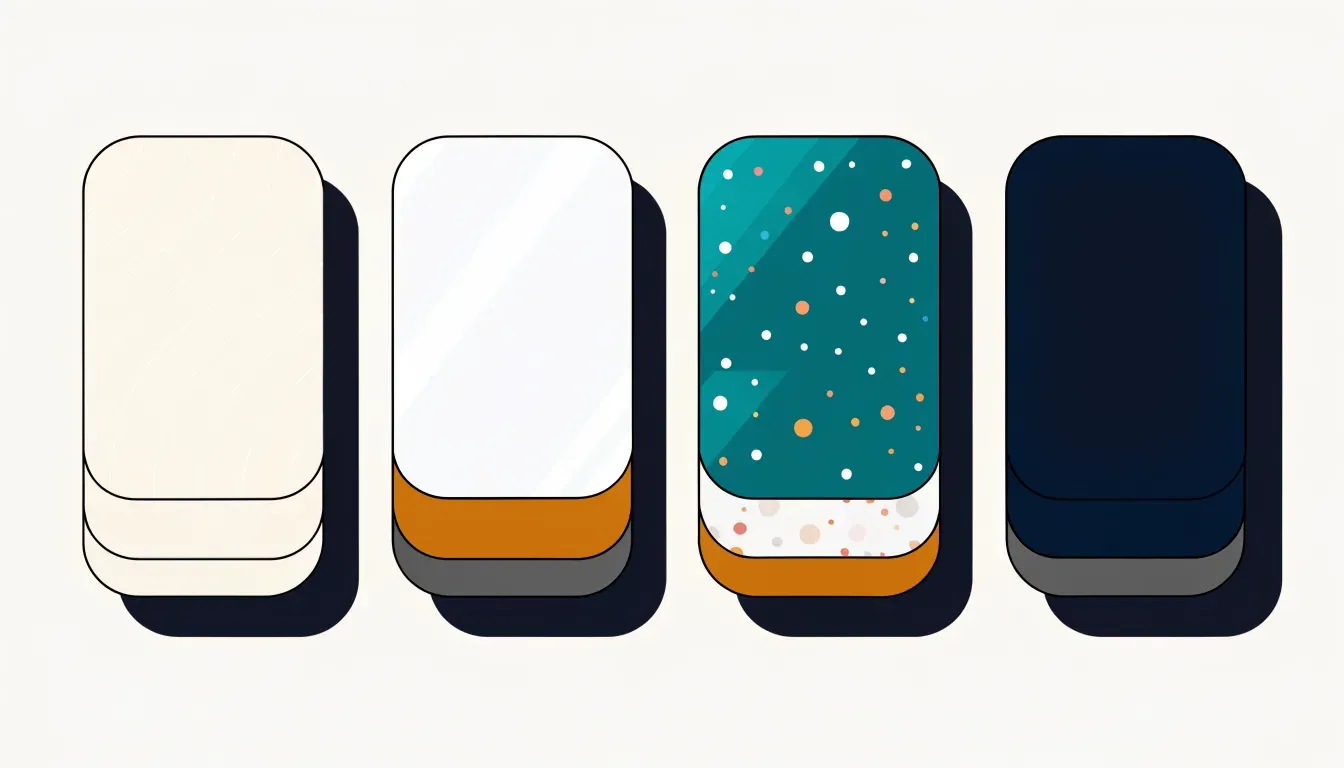
Key takeaways
- Single-stage paint puts color and gloss in one product. It is cheaper and faster, and it is what budget resprays use.
- Base coat and clear coat is the modern standard. The color layer sits under a separate clear layer that I-CAR says provides UV protection.
- Tri-coat adds a mid-coat between the base and the clear. Paint makers call for test panels and wider blends, so tri-coat repairs cost more.
- Matte finishes cannot be polished, buffed or blended, so a repair often means refinishing a larger area.
There are four main types of car paint: single-stage, base coat and clear coat, tri-coat, and matte. Almost every modern car leaves the factory in base coat and clear coat. Single-stage paint is the cheaper one-product option used on budget resprays and work vehicles. Tri-coat colors add a third layer between the color and the clear. Matte is a special clear coat that looks flat and cannot be polished.
The type matters most when the car needs paint work. It decides how hard the color is to match, how much of the car gets sprayed, and what the job costs.
The four types at a glance
| Type | Layers over primer | Where you see it | Repair notes |
|---|---|---|---|
| Single-stage | One product: color and gloss together | Budget resprays, older cars, work trucks, solid colors | Cheapest and fastest. Will not match a factory base-and-clear finish side by side |
| Base coat and clear coat | Color base coat, then a separate clear coat | Nearly all modern cars | Blended into the next panel for a match. Clear provides UV protection |
| Tri-coat | Base coat, a mid-coat, then clear | Premium whites and other special colors | Needs a let-down test panel and wider blends. Costs more |
| Matte | Base coat under a low-gloss clear | Some premium and special-edition cars | Cannot be polished, buffed or blended. Gloss must match too |
Metallic and pearl are effects, not separate systems. They are pigments in the base coat (or the mid-coat on a tri-coat).
How a factory finish is built
BASF, one of the big coating makers, describes a factory finish as four layers. First an e-coat of about 20 micrometers for corrosion protection, then a primer of about 30 micrometers that smooths the surface and absorbs stone-chip impacts. Next comes the base coat, only about 15 micrometers thick, which holds the color and any metallic or pearl effect. Last is a clear coat of about 40 micrometers that protects everything below from sun, rain, salt, sap and bird droppings. The whole stack is 100 to 110 micrometers, about one-tenth of a millimeter.
I-CAR, the industry training group, gives the same picture in shop units: a typical base-and-clear finish is 4.0 to 6.0 mils thick, with about 2.0 mils of that being clear coat. That thin top layer is all that stands between the color and the weather.
Single-stage paint
Single-stage paint mixes the color and the glossy top layer into one product. Synchrony’s paint guide puts it simply: single-stage paints combine base and clear coats in one layer, while two-stage paints are applied separately.
Modern single-stage refinish paint is usually an acrylic urethane. PPG’s data sheet for its OMNI MTX product describes a fast-drying acrylic urethane single-stage topcoat for collision shops, sold in solid and metallic colors, applied in about two coats to a final film of 2.0 to 2.5 mils. PPG’s Concept line is another two-component single-stage urethane in solid and metallic colors.
Budget paint chains build their price tiers around it. Maaco’s Basic package uses single-stage enamel, and its Preferred package uses single-stage urethane, which Maaco says is more chip-resistant than enamel and holds its finish longer. Basic carries a 1-year warranty and Preferred a 3-year warranty.
The trade-off. StormWise, a Colorado collision shop, notes in its bumper paint guide that single-stage paint lacks a separate protective clear coat and is more prone to fading and wear over time. It is fine for a work truck, an older car or a quick sale. It is the wrong product for repairing one panel on a modern car, because it will not look like the factory base-and-clear paint next to it.
Older paint types. Synchrony notes that acrylic lacquer was common from the 1920s to the 1960s, fades with UV exposure and is banned in some states. You are unlikely to be offered it today.
Base coat and clear coat (two-stage)
This is what is on your car if it was built in the last few decades. The base coat carries the color and effect. The clear coat goes on top for gloss and protection. Maaco calls two-stage systems the industry standard for modern vehicle finishes and uses one for its top Premium package, which carries a 5-year warranty.
Why it matters for repairs:
- The clear coat does the protecting. I-CAR says clearcoat provides UV protection, and that removing too much of it during a repair can cause hazing, discoloration, peeling and finish failure.
- The color can be adjusted before it is locked in. Shops tint the base coat and blend it into the next panel so the eye does not see a line. I-CAR describes blending as extending the base color into the neighboring panel so some original color shows through the new color.
- The clear goes edge to edge. I-CAR’s curriculum says clearcoat should be applied from edge to edge of the panel for proper coverage and UV protection, and that blending the clear itself is likely not covered by the paint maker’s warranty.
When clear coat fails, the result is the peeling and flaking you see on older roofs and hoods. Clear coat peeling explains why it happens and what a real fix involves.
Tri-coat (three-stage)
Tri-coat colors add a mid-coat between the base coat and the clear. White tri-coat is common enough that the Society of Collision Repair Specialists used it, with a solid white and a silver metallic, in its 2022 blend study on Ford F-150 panels. The look depends on how many mid-coats go on, so matching one is a test-and-measure job.
Axalta’s tri-coat repair procedure starts with a let-down panel. The painter sprays the base color, then builds up one to five coats of mid-coat in strips, clears half of it, and compares it with the car in daylight to see how many mid-coats match. Axalta says a separate let-down panel must be made for each tri-coat color, and that tri-coat colors need more area for extended blends than normal base-and-clear colors.
PPG’s blending procedure gives numbers. It asks for a blend area of at least 12 inches for most colors and at least 24 inches for tri-coat and quad-coat colors. PPG also says a tri-coat spray-out card should dry 8 hours or more before the painter judges it, against 2 to 4 hours for a solid color.
What that means for you: more labor, more material and often an extra panel blended. Maaco quotes tri-coat and pearl colors separately from its standard packages. StormWise lists tri-coat bumper paint at $750 to $2,500 or more (single-source estimate, checked Nov 2026), well above its standard bumper range. See car paint color matching for how shops get these colors right.
Matte finishes
A matte finish is usually a normal base coat under a special low-gloss clear. A 2014 Chrysler service bulletin for the matte Viper explains the difference: gloss paint uses a high-gloss clear that reflects light, while matte uses a coating that diffuses light for a flat look.
That flat look is fragile:
- No polishing. The Chrysler bulletin says scratches or wear in a matte coating cannot be polished or buffed out, and once an area becomes shiny the flat look cannot be restored.
- No blending. I-CAR says matte repairs often need larger areas refinished because blending and buffing are not possible.
- No dust nibs fixed afterward. PPG’s Nexa Autocolor matte clear data sheet warns that dirt in a matte or low-gloss finish cannot be corrected after the final clear coat. The booth has to be very clean.
- Gloss has to match, not just color. I-CAR says a test panel should confirm the color at the right matte gloss level. PPG’s matte system mixes two clears in different ratios to hit five gloss levels.
- Care is different. A Nissan bulletin covered by I-CAR advises against automatic car washes and calls for soaps made for matte finishes.
Matte paint costs more up front, too. AAA says a matte finish can cost $2,000 to $6,000 more than a glossy one (AAA, undated, checked Nov 2026). If you want the look without the repair risk, a matte wrap is an option; see paint vs vinyl wrap. For candy, pearl and two-tone custom work, see custom car paint.
Metallic and pearl effects
BASF says the base coat holds the color and effect pigments known as metallic or pearl effects. These flakes make matching harder because they have to lie the same way as the factory paint. I-CAR describes the drop coat (also called an orientation coat), a light mist coat used on metallics and pearls so the flakes orient properly. AAA puts basic metallic effects at $200 to $500 extra on a full paint job (undated, checked Nov 2026).
What paint type means for your repair bill
- Know what you have. Maaco notes the paint code is on the vehicle information sticker, usually on the dash, in the trunk or inside the door jamb. Give it to every shop you ask for a quote.
- Match like with like. A repair on a base-and-clear car should be base and clear. Ask the shop which system and brand it will use.
- Expect tri-coat and matte to cost more. Both need extra test work, and tri-coat needs wider blends. Matte may need whole panels.
- Budget resprays are usually single-stage. That is fine when you are painting the whole car the same color and accept a shorter warranty. See cheap car paint jobs for what those packages include.
What to do next
Find your paint code, then get the cost guide that fits your job: bumper paint cost, the cost to paint one panel or the cost to paint a whole car. If you are not sure how much of the car needs paint, read full repaint vs spot repair. When you compare quotes, ask each shop to write down the paint system, the number of coats and which panels it will blend. The car paint guide has the full checklist for choosing a paint shop.
Frequently asked questions
What type of paint is on most new cars?
Base coat and clear coat. The base coat carries the color and any metallic or pearl effect, and a separate clear coat goes on top for gloss and protection. Maaco calls two-stage paint the industry standard for modern finishes. BASF describes the full factory finish as four layers: e-coat, primer, base coat and clear coat, about 100 to 110 micrometers thick in total.
Is single-stage paint bad?
No, but it is a different product with a different job. Single-stage paint is cheaper and quicker, and it suits older cars, work trucks and solid colors. It is not the right choice for matching a modern base-and-clear car, because the finish and gloss will not look the same next to factory paint. Ask what system a quote uses.
Full guide: Cheap Car Paint Jobs: What a Budget Respray Gets You
Why does tri-coat paint cost more to repair?
It takes more steps and more test work. Axalta's procedure starts with a let-down panel to find how many mid-coats match the car, and it calls for longer blends than a normal base-and-clear color. PPG asks for at least 24 inches of blend room for tri-coat colors, against 12 inches for most others. Maaco quotes tri-coat and pearl colors separately from its packages.
Full guide: Car Paint Color Matching: Why It's Hard and How Shops Get It Right
Can matte paint be repaired?
Yes, but not by polishing. A Chrysler bulletin says scratches in a matte coating cannot be polished or buffed out, and I-CAR says matte repairs often need larger areas refinished because blending and buffing are not possible. The painter also has to match the gloss level, not just the color, using a test panel.
Sources
- BASF, Car finish: higher gloss and fewer scratches (undated) — accessed November 24, 2026
- I-CAR, Back-To-Basics: Clearcoat Film Thickness (Aug 8, 2019, validated 2025) — accessed November 24, 2026
- I-CAR, Color Match: Blending And Tinting (Apr 25, 2025) — accessed November 24, 2026
- I-CAR, Ask I-CAR: What does I-CAR say about blending clearcoat? — accessed November 24, 2026
- I-CAR, How Matte Finishes Affect The Repair Plan (Aug 10, 2022) — accessed November 24, 2026
- I-CAR, Nissan Releases Caring For Matte Paint Finish Bulletin (Oct 17, 2014, validated 2024) — accessed November 24, 2026
- Chrysler Group, Service Bulletin 23-002-14, Matte Finish Care And Protection (Jan 9, 2014) — accessed November 24, 2026
- PPG Refinish, OMNI MTX 3.5 VOC Single Stage data sheet (OB47NR, 02/20) — accessed November 24, 2026
- PPG Refinish, Concept (DCC) Acrylic Urethane data sheet (P-168, Rev 01/25) — accessed November 24, 2026
- PPG Refinish, PD-0706 Basecoat Blending - Solvent — accessed November 24, 2026
- PPG Refinish, PD-0632 Creating Sprayout Card — accessed November 24, 2026
- PPG (Nexa Autocolor), 2K Matt Clearcoat System P190-1062/-1063 data sheet (Mar 2014) — accessed November 24, 2026
- Axalta Cromax, Tri-Coat Repair Procedure (technical sheet) — accessed November 24, 2026
- Repairer Driven News, SCRS research concludes blend time is greater than full refinish (Nov 2, 2022) — accessed November 24, 2026
- Maaco, What Does a Maaco Paint Job Actually Cost? (Aug 11, 2026) — accessed November 24, 2026
- Maaco, How to Find Your Car's Paint Code (Feb 13, 2024, updated Oct 20, 2026) — accessed November 24, 2026
- Synchrony, How Much Should It Cost To Paint Your Vehicle? (Jan 6, 2025) — accessed November 24, 2026
- StormWise, How Much to Paint a Bumper (Feb 7, 2024, updated Oct 21, 2026) — accessed November 24, 2026
- AAA, How Much Does It Cost to Paint a Car? (undated) — accessed November 24, 2026