Clear Coat Peeling: Causes and Real Fixes
Peeling clear coat cannot be polished or patched back on. The only lasting fix is to remove the failed clear, and often the color under it, then refinish the whole panel. Here is why it happens and what that costs.
Key takeaways
- Clear coat peels when it loses its bond to the color coat underneath. Sun exposure, a poor earlier repair and damage that lets the edge lift are the usual causes.
- Polishing, wax and spraying clear over the top do not fix it. PPG's correction is to remove the failed material, sand a larger area and refinish.
- Expect to refinish whole panels. ThePricer puts a hood with failed clear coat at $1,000 to $1,500 or more.
- Wear and tear is not covered by standard insurance. A factory paint warranty may cover defective paint on a newer car.
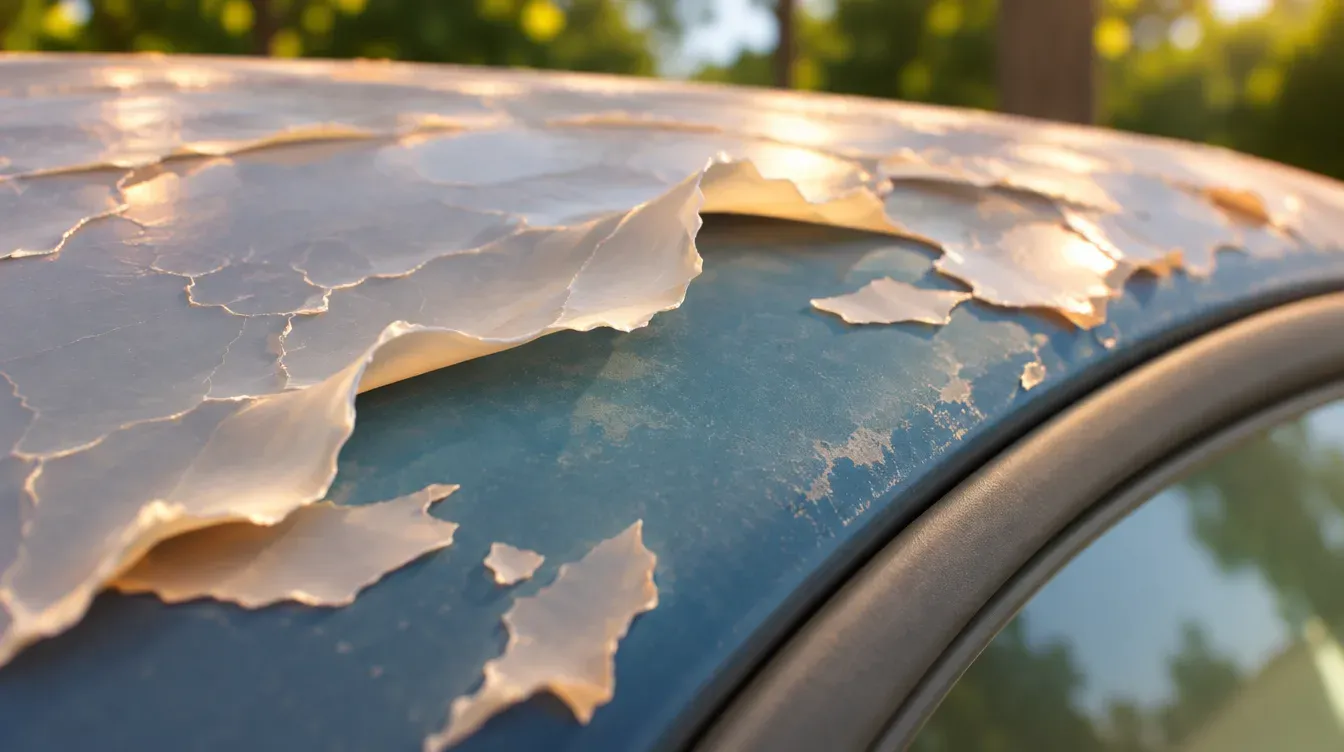
Clear coat peeling means the clear top layer of your paint has lost its bond to the color coat under it. It will not reattach. The real fix is to remove the failed clear, and often some of the color under it, then repaint the whole panel in base coat and clear coat. Polish, wax, touch-up clear and spray cans can hide it for a while, but the edge will keep lifting.
Here is why it happens, what a proper repair looks like, and what it costs.
What you are looking at
Modern paint is layered. BASF describes a factory finish as an e-coat, a primer, a thin color base coat of about 15 micrometers, and a clear coat of about 40 micrometers on top that protects the finish from sun, rain, salt, sap and bird droppings. I-CAR gives the clear coat as about 2.0 mils of a 4.0 to 6.0 mil finish, and says it provides UV protection for the vehicle.
I-CAR lists what happens when that thin clear layer is lost or too thin: hazing, discoloration, peeling and finish failure. You usually see the hazing first, as dull or milky patches, then a flaking edge. Gerber Collision notes that peeling can start out small but spread quickly. The longer you wait, the more panels you pay for.
What causes clear coat to peel
Sun and weather. Gerber lists prolonged exposure to the sun and elements as one of the main causes. I-CAR warns that when too much clear is removed during repair work, the finish can suffer hazing, discoloration, peeling and finish failure, because the UV protection is gone.
A poor earlier repair. If the car has been repainted, the new layers may be the problem. I-CAR describes adhesion failure as peeling, delaminating or chipping of refinish coatings, most commonly between the base coat and clear coat or between the new finish and the original. Its listed causes include:
- Too much film thickness and too short a flash time between coats
- Dirt, oil, overspray or poor sanding of the old surface
- Primers and sealers that are not compatible with the base coat, or mixing brands
- Products that were poorly mixed or past their expiry date
PPG’s defect guide lists the same family of causes for clear coat delamination: too much base coat, not letting the base coat flash off long enough before clearing it, and not mixing the clear properly. For peeling in general, PPG adds poor sanding and cleaning, too much film build, dry spray, and tape left on too long.
Damage at a chip or edge. Gerber notes that dings and damage that expose the paint under the clear can start peeling, and recommends having finish damage repaired right away.
Old vinyl or decals. I-CAR reports that when a wrap or decal has been on a panel for a long time in the sun, its adhesive can harden and etch into the clear coat, and may have to be sanded off.
Fixes that don’t work
- Polishing or compounding. CARSTAR notes that polishing uses abrasive compounds to remove a thin layer of paint. I-CAR warns that removing too much clear leads to hazing, discoloration and peeling. On a panel that is already peeling, polishing thins what is left.
- Spraying clear over the peeling area. The new clear would sit on a layer that has already lost its bond. PPG’s fix for peeling starts with removing the failed material, not covering it. I-CAR also says clear should be applied edge to edge on a panel, and that blending clear is likely not covered by the paint maker’s warranty.
- Wax or sealant. CARSTAR describes wax as a protective layer on top of the paint. It protects sound paint; it does not reattach a lifting film.
- Wrapping over it. Avery Dennison lists painted surfaces with a poor paint-to-substrate or paint-to-paint bond as unsuitable for its wrap film, and does not warrant removal from such surfaces. A wrap can pull loose paint off when it comes off.
The real fix
The repair PPG gives for peeling is short: remove the material from the affected area, sand a slightly larger area, and refinish as needed. For delamination it says to sand the affected areas and refinish.
In practice, a proper repair looks like this:
- Strip the failed clear. The painter sands or strips back until every bit of loose clear is gone and the edges are feathered smooth. Maaco says that if your current paint is peeling or delaminating, the right first step is stripping the affected panels to bare metal, priced separately from its paint packages.
- Check the color coat and primer. If the color is sanded through or faded, it gets primed and resprayed too.
- Refinish the whole panel. New base coat, blended into the next panel if needed, then clear coat edge to edge across the panel.
- Look at the other panels. If the roof is peeling, ask the shop to check the hood and trunk lid too, so you can decide on all of them at once.
Can I just sand and clear a small spot? For a single small spot on an older car you plan to sell soon, a careful spot repair may buy time. It is not the edge-to-edge refinish I-CAR describes, and a blended clear edge is likely outside the paint maker’s warranty. See how to use touch-up paint for what a DIY repair can and cannot do.
What it costs
| Job | Published estimate | Source |
|---|---|---|
| Hood with failed clear coat, chips or dents | $1,000–$1,500+ | ThePricer, Aug 2026 |
| Straightforward hood repaint, sound panel | $300–$1,000 | ThePricer, Aug 2026 |
| Peeling roof, paint-chain estimator (5-year-old Camry, California) | $289–$481 | Capital One Auto Navigator, Jul 2022 |
These are single-source estimates, checked in November 2026, not quotes. ThePricer notes that rust, peeling clear coat, dents, old body filler and failing paint can make preparation cost as much as the spraying itself. That is why a peeling panel costs more to paint than a sound one.
When clear coat is failing on most of the car’s top surfaces, compare panel quotes with a full respray. Budget packages can be tempting, but Maaco itself says stripping peeling panels is extra and that skipping that prep puts the result at risk. See cheap car paint jobs and full repaint vs spot repair.
Warranty and insurance
Factory paint warranty. AAA says most manufacturer warranties cover paint for three years or 36,000 miles when the damage results from defective paint, but they don’t usually cover chips or scratches. If your car is still under warranty, take photos and ask a dealer before you pay anyone else.
Body shop warranty. If the peeling panel was repainted by a shop, check that shop’s written warranty. Peeling of a repaint points to the adhesion problems I-CAR describes, which are the shop’s materials and process, so ask the shop to inspect it first.
Insurance. GEICO says normal wear and tear, such as fading paint and oxidation, is not covered by any standard auto insurance policy. If a covered event caused the damage, such as hail or a collision, ask your insurer.
How to slow it down
- Park in a garage or shade when you can. Gerber recommends this to prevent delamination.
- Have chips and edge damage repaired before they lift.
- Wash off bird droppings and sap promptly.
- Do not machine-polish panels that are already thin or hazy.
Fading and peeling are different failures; for chalky, oxidized paint see faded car paint.
What to do next
Photograph every affected panel in daylight. Check whether the car or the last repair is still under warranty. Then get two or three written quotes that say how the shop will remove the failed clear, which panels it will refinish and blend, and what its warranty covers. For hoods, start with hood repaint cost. For the whole picture on paint prices, see how much it costs to paint a car, and for how the layers work, types of car paint. The car paint guide covers choosing a paint shop.
Frequently asked questions
Can peeling clear coat be fixed without repainting?
Not in a way that lasts. Once clear coat lifts, it has lost its bond to the color coat, and new clear sprayed over the edge will lift with it. PPG's correction for peeling is to remove the material from the affected area, sand a slightly larger area and refinish. Polishing can make faded clear look better, but it removes clear and cannot reattach a peeling layer.
How much does it cost to fix peeling clear coat?
It depends on how many panels are affected and how much has to be stripped. ThePricer puts a hood with failed clear coat at $1,000 to $1,500 or more (Aug 2026). In 2022 a paint chain's online estimator quoted $289 to $481 to refinish a peeling roof. When most of the top surfaces are peeling, a full respray may cost less than panel-by-panel repairs.
Full guide: How Much Does It Cost to Repaint a Hood?
Does insurance cover peeling clear coat?
Usually not. GEICO says normal wear and tear, such as fading paint and oxidation, is not covered by any standard auto policy. If a covered event caused the damage, such as hail or a crash that cracked the finish, collision or comprehensive may apply. A newer car may still be under the maker's paint warranty, which AAA says often runs three years or 36,000 miles.
Why does clear coat peel on the roof and hood first?
Those surfaces face the sun most of the day. I-CAR says clear coat provides the UV protection for the finish, and Gerber lists prolonged sun exposure as a main cause of peeling, and recommends parking in a garage or shaded area to prevent it. The roof, hood and trunk lid get the most direct sun on most cars.
Sources
- I-CAR, Back-To-Basics: Clearcoat Film Thickness (Aug 8, 2019, validated 2025) — accessed November 24, 2026
- I-CAR, Back-To-Basics: Adhesion Failure (Feb 5, 2019, validated 2026) — accessed November 24, 2026
- I-CAR, Ask I-CAR: What does I-CAR say about blending clearcoat? — accessed November 24, 2026
- I-CAR, Repairing A Vehicle With Vinyl Wrap Or PPF (Jun 23, 2022, validated 2024) — accessed November 24, 2026
- PPG Refinish, Peeling (Common Paint Defects Guide) — accessed November 24, 2026
- PPG Refinish, Delamination of Clearcoat (Common Paint Defects Guide) — accessed November 24, 2026
- BASF, Car finish: higher gloss and fewer scratches (undated) — accessed November 24, 2026
- Gerber Collision & Glass, Common issues with car paint (undated) — accessed November 24, 2026
- Maaco, What Does a Maaco Paint Job Actually Cost? (Aug 11, 2026) — accessed November 24, 2026
- ThePricer, How Much Does a Car Hood Paint Job Cost? (updated Aug 13, 2026) — accessed November 24, 2026
- ThePricer, How Much Does It Cost To Paint A Car? (updated Aug 22, 2026) — accessed November 24, 2026
- Capital One Auto Navigator, How Much Does It Cost To Paint a Car? (Jul 8, 2022) — accessed November 24, 2026
- AAA, How Much Does It Cost to Paint a Car? (undated) — accessed November 24, 2026
- CARSTAR, When Can You Wax a Car After It's Painted? (Oct 31, 2024) — accessed November 24, 2026
- GEICO, Does Car Insurance Cover Scratches and Dents? (Sep 18, 2026) — accessed November 24, 2026
- Avery Dennison, SW900 Supreme Wrapping Film Product Data Sheet (Rev 21, Nov 17, 2026) — accessed November 24, 2026