Caring for Fresh Paint: Washing, Waxing and Coatings
Fresh paint keeps hardening for weeks after it looks dry. Wash it gently by hand, keep bird droppings and sap off it, and hold off on wax, polish and coatings until it has cured. Here is what carmakers, paint makers and shops each say, and where they disagree.
Key takeaways
- Hand wash gently in the shade, rinse first, and remove bird droppings and sap the same day. Every source agrees on this.
- Skip the automatic car wash at first. Polestar says not to use one for the first few months on a new car because the paint takes time to fully harden.
- Wait to wax. Advice runs from 60 days (Axalta, for new trucks) to 90 days (PPG, for new commercial vehicles); for body shop repaints, the 60 to 90 days figure comes from shops, not paint makers.
- Don't polish fresh paint, and don't put a ceramic coating or film on it until it has cured. I-CAR says coatings should not go over fresh paint.
Fresh paint needs gentle hand washing, fast removal of bird droppings and sap, and patience before wax, polish or coatings. Paint feels dry within hours but keeps hardening for days to weeks. In that window, harsh soap, brushes, polish and wax can dull or mark it. A new car and a body shop repaint are not quite the same, and the sources that give advice for each differ, so this guide says who said what.
Two kinds of “new paint”
A new car from the factory. Its care rules are in the owner’s manual. Carmakers write them for their own paint.
A body shop repaint. This is refinish paint from a paint maker such as PPG or Axalta. The paint maker’s data sheet tells the painter when the paint can be handled, polished and fully cured. Axalta’s data sheet for its DX800 clear coat, for example, gives full cure as 7 days at 77°F, says not to expose it to rain or heavy moisture for 24 hours, and says decals go on best after 7 days. Cure times vary by product, temperature and whether the paint was baked; how long a paint job takes lists more examples.
What is missing: the paint-maker documents checked for this guide give cure times for painters, not consumer washing and waxing dates for a repaint. The day counts for repaints below come from body shops. Ask the shop that painted your car for its written aftercare instructions. Some paint warranties depend on them: Axalta’s Nason refinish warranty, for example, says the owner has no claim if the finish was not maintained as it recommends.
When to wash, wax and polish
| Step | New car from the factory | Body shop repaint |
|---|---|---|
| First wash | Polestar: wash as soon as it gets dirty. Axalta (new Freightliner trucks): rinse with water only for the first 30 days | CARSTAR: wait at least two weeks (shop guidance) |
| Automatic car wash | Polestar: not during the first few months | CARSTAR: skip it while the paint cures (shop guidance) |
| Wax | Polestar: fine during the first year. Axalta (trucks): not in the first 60 days. PPG (commercial vehicles): not in the first 90 days | CARSTAR: wait 60 to 90 days (shop guidance) |
| Polish | Polestar: not needed until the car is at least a year old | CARSTAR: never polish a newly painted car |
| Ceramic coating | I-CAR: not over fresh paint; follow the paint and coating makers | Same |
| Film, wrap or decals | I-CAR: paint must be fully cured first | Same; Axalta DX800: decals best after 7 days |
The safe rule: follow the owner’s manual for a new car and the painter’s written instructions for a repaint. If you have neither, take the longest wait in the table. Waiting costs nothing; waxing or polishing too early can.
PPG’s defect guide shows why. It lists polishing too soon as a cause of poor gloss and swirl marks. It says wax applied before the paint has fully hardened can be absorbed into the film, leaving greasy, dull smears. And it lists strong detergents on new paint, and compounding too soon, as causes of a dull finish.
How to wash fresh paint
These steps combine Polestar’s owner’s manual and Axalta’s paint care bulletin, which is written for brand-new factory finishes.
- Work in the shade on a cool panel. Polestar says sun can dry detergent or wax until it becomes abrasive. Axalta says not to wash when the paint is hot from the sun.
- Rinse first. Hose off loose dirt and grit before anything touches the paint. Axalta warns that grit picked up in transport can be abrasive to a new clear coat.
- Use a neutral, non-abrasive car wash soap. Axalta specifies a water-based, non-abrasive, neutral-pH detergent. CARSTAR also says pH-neutral. PPG lists detergents on new surfaces among the causes of chemical damage. Axalta’s refinish warranty adds that strong and abrasive detergents and chemicals must be avoided at all times.
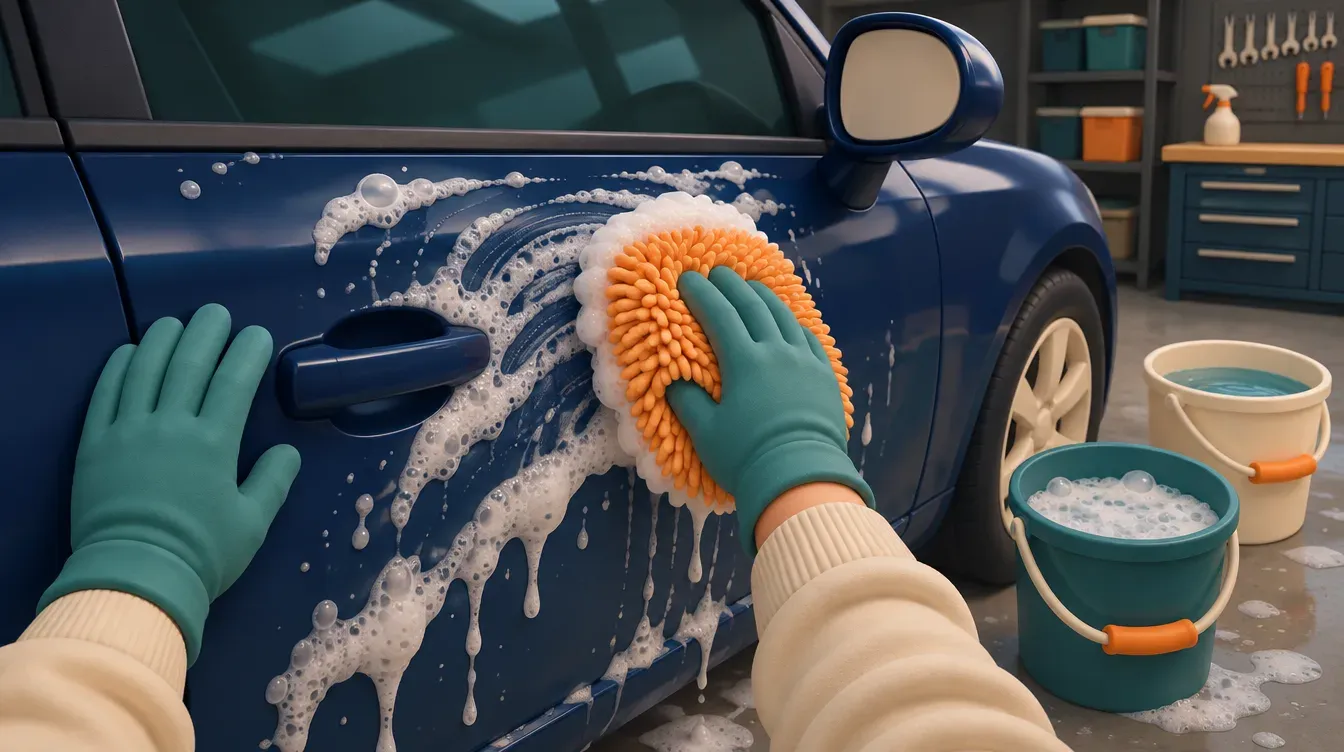
- Use two buckets and a soft mitt. Axalta recommends one bucket of soapy water and one of clean rinse water for the mitt, so dirt doesn’t go back on the paint. Avoid stiff nylon brushes, which it says will dull and scratch the paint.
- Wash top to bottom. Axalta says the lowest parts of the car are the dirtiest. Its matte bulletin also warns against using the same sponge on the wheels and the paint.
- Never dry-wipe. Axalta says never to dry-wipe the paint to clean it.
- Dry it, don’t let it air dry in the sun. PPG’s defect guide says not to let water air dry on freshly painted repairs, because it leaves dull water spots. Polestar says to dry with a clean, soft chamois or squeegee.
- Go easy with a pressure washer. Polestar says to keep the nozzle at least 13 inches from the car and keep it moving. Axalta’s bulletin tells owners to avoid pressure washers for the first 30 days on a new finish.
Bird droppings, sap and fuel can’t wait. Kia’s owner’s manual says bird droppings are highly corrosive and may damage paint “in just a few hours.” Axalta says to wash off droppings and sap as soon as possible to avoid acid etching of a new topcoat. PPG’s advice for new commercial vehicles is not to let sap, droppings, gasoline, antifreeze or windshield fluid stand on the paint in the first 30 days. Soak droppings with plenty of water before wiping, as Polestar describes. PPG says severe sap damage may mean the finish must be removed and refinished.
Wax, sealant or ceramic coating?
Once the paint has cured, some protection helps it last. Here is how the options compare.
Wax. A thin protective layer you renew every few months. Polestar says polymer waxes protect against oxidation, road dirt and fading. CARSTAR suggests waxing every three to four months once the paint has cured.
Carmaker-approved treatments only, on a new car under warranty. Polestar’s manual goes further than most: it says to use only paint treatments it recommends, that other treatments such as sealing or “protection” products could damage the paint, and that damage they cause is not covered by its warranty. Check your own manual before buying a dealer add-on.
Ceramic coating. I-CAR describes these as clear, water-repelling, chemical-resistant coatings that bond semi-permanently to the paint. Three things to know:
- Not on fresh paint. I-CAR says a ceramic coating should not be applied over fresh paint, and that curing recommendations vary by refinish product, curing method and coating. Follow both the paint maker and the coating maker.
- It still needs washing. At a 2025 Society of Collision Repair Specialists meeting reported by Repairer Driven News, the presenter said coatings still get mineral deposits, etching, scratches, swirl marks and rock chips, and that coated cars should not go longer between washes. He said the common silica (SiO2) coatings last one to two years.
- It makes later paint repair harder. I-CAR quotes Axalta: coatings must be removed before paint preparation, which takes extra labor and materials. Tell the shop if the car is coated.
Paint protection film. Clear film is the option that actually absorbs stone chips; see paint chip repair. I-CAR says the paint must be fully cured, and the paint and film makers’ guidelines followed, before film, wraps or decals go on. If a shop repaints a panel that had film, expect the car to stay a little longer. For a full color change, see paint vs vinyl wrap.
Matte paint is different
Axalta’s matte care bulletin has its own rules. Wash with a neutral cleaner made for matte finishes and a soft sponge. Never use polish or wax made for gloss paint, which leaves blotchy patches. Never dry-wipe it or rub stubborn spots hard, which creates shiny patches that cannot be reversed. Don’t let it air dry, and don’t stick labels or magnetic signs on it.
What protection costs
| Option | Published estimate | Source |
|---|---|---|
| Professional wax | $100–$200 | AAA, undated (single-source estimate) |
| Ceramic coating, most cars | $600–$1,500 (ThePricer, Oct 2026); $500–$2,000 (AAA) | Two sources |
| Ceramic coating, premium or with heavy correction | $1,500–$2,500+ | ThePricer, Oct 2026 (single-source estimate) |
| Paint protection film, full front | $1,850–$2,500 (ThePricer, Sep 2026); about $2,000 (Capital One example) | Two sources |
These are estimates checked in November 2026, not quotes. ThePricer notes that paint preparation is usually the biggest part of a coating bill, and that a nearly new car needs far less of it than an older one. That is one argument for protecting paint early, once it has cured.
Signs something is wrong
Fresh paint that stays soft, dulls quickly or shows spots may not have cured properly. PPG’s defect guide lists slow drying, water spotting and wax incorporation among the problems painters correct. If you see haze, a smeary dull patch, or lifting at an edge in the first weeks, go back to the shop under its warranty rather than polishing it yourself. If the clear later starts to flake, read clear coat peeling; if it slowly dulls over years, read faded car paint.
What to do next
Ask for written aftercare instructions when you pick up the car, and keep them with the warranty. Hand wash in the shade for the first weeks, deal with droppings and sap the same day, and put a reminder in your phone for the wax or coating date. If you are still choosing a painter, how much it costs to paint a car and the car paint guide cover price and how to pick a shop.
| Scenario | Typical range (estimate) | What drives it |
|---|---|---|
| Professional wax | $100–$200 (AAA, undated; single-source estimate) | Needs repeating every few months |
| Professional ceramic coating | $600–$1,500 for most cars, $1,500–$2,500+ for premium or correction-heavy jobs (ThePricer, Oct 2026); $500–$2,000 (AAA, undated) | Apply only after the paint has cured |
| Paint protection film, full front | $1,850–$2,500 (ThePricer, Sep 2026); about $2,000 for a front end (Capital One example, 2022, updated 2024) | Paint must be fully cured first |
Ranges are published estimates checked in November 2026, not quotes. Rows marked single-source estimate rest on one publication.
Frequently asked questions
How long should I wait to wash a new paint job?
For a body shop repaint, CARSTAR advises waiting at least two weeks, then using a pH-neutral car shampoo and soft microfiber cloths. That is shop guidance; the paint makers' data sheets checked for this guide give cure times, not wash dates. Rinse off bird droppings and sap right away with plain water in the meantime, and ask the shop that painted the car for its instructions.
Full guide: How Long Does It Take to Paint a Car (and How Long Does Paint Take to Cure)?
When can I wax new car paint?
For a new car, follow the owner's manual. Polestar says waxing is fine during the first year. Axalta's bulletin for new Freightliner trucks says not to wax for 60 days, and PPG's advice for new commercial vehicles says 90 days. For a body shop repaint, CARSTAR's general rule is 60 to 90 days. When in doubt, take the longer wait.
Can I take a newly painted car through a car wash?
Not at first. Polestar recommends against automatic car washes during the first few months on a new car, because the paint takes time to fully harden. CARSTAR says to skip automatic washes on fresh repaints because they can scratch new paint. A gentle hand wash is safer for the first weeks.
Should I get a ceramic coating on new paint?
Only once the paint has cured, and only if you will still wash the car often. I-CAR says ceramic coatings should not be applied over fresh paint, and that cure times vary by product, so follow both the paint maker and the coating maker. Coatings still collect water spots and scratches, and a shop must remove one before repainting a panel later.
Does fresh paint need different care if it is matte?
Yes. Axalta's matte care bulletin says never to use polish or wax made for gloss paint on a matte finish, never to dry-wipe it, and never to rub stubborn spots hard, because that creates shiny patches that cannot be reversed. Use cleaners made for matte paint and a soft sponge.
Sources
- Polestar 2 (2023) owner's manual, "Automatic car washes" — accessed November 24, 2026
- Polestar 2 (2023) owner's manual, "Polishing and waxing" — accessed November 24, 2026
- Polestar 2 (2023) owner's manual, "Hand washing" — accessed November 24, 2026
- Polestar 2 (2023) owner's manual, "High-pressure washing" — accessed November 24, 2026
- Kia owner's manual, "Keep paint and trim in good condition" — accessed November 24, 2026
- Freightliner Service Bulletin 98-020, Axalta Paint Finish Care (Jan 30, 2018), via NHTSA — accessed November 24, 2026
- Fleet Maintenance, "Finish care: How to promote a longer lasting vehicle finish" (Aug 4, 2016), quoting PPG Commercial Coatings — accessed November 24, 2026
- Axalta Duxone, DX800 Universal Clearcoat technical data sheet — accessed November 24, 2026
- Axalta, Nason XL Paint Warranty, owner's warranty agreement (3-NA519, 2018), via NAPA — accessed November 24, 2026
- Axalta Coating Systems, Technical Bulletin TD 6066: Cleaning, Care and Maintenance of Matt Finishes (Apr 2023) — accessed November 24, 2026
- PPG Refinish, Water Spotting (Common Paint Defects Guide) — accessed November 24, 2026
- PPG Refinish, Slow Drying (Common Paint Defects Guide) — accessed November 24, 2026
- PPG Refinish, Poor Gloss (Common Paint Defects Guide) — accessed November 24, 2026
- PPG Refinish, Tree Sap (Common Paint Defects Guide) — accessed November 24, 2026
- PPG Automotive Refinish (EMEA), Acid Attack (Common Paint Defects Guide) — accessed November 24, 2026
- PPG Automotive Refinish (EMEA), Wax Incorporation (Common Paint Defects Guide) — accessed November 24, 2026
- PPG Automotive Refinish (EMEA), Dull Finish (Common Paint Defects Guide) — accessed November 24, 2026
- CARSTAR, When Can You Wax a Car After It's Painted? (Oct 31, 2024) — accessed November 24, 2026
- I-CAR, Ceramic Coatings Considerations (Oct 24, 2023, validated 2026) — accessed November 24, 2026
- I-CAR, Repairing A Vehicle With Vinyl Wrap Or PPF (Jun 23, 2022, validated 2024) — accessed November 24, 2026
- Repairer Driven News, "SCRS corrects common industry misconceptions on ceramic coatings" (Jul 23, 2025) — accessed November 24, 2026
- AAA, How Much Does It Cost to Paint a Car? (undated) — accessed November 24, 2026
- ThePricer, How Much Does Ceramic Coating Cost? (updated Oct 4, 2026) — accessed November 24, 2026
- ThePricer, How Much Does Paint Protection Film (PPF) Cost? (updated Sep 17, 2026) — accessed November 24, 2026
- Capital One Auto Navigator, What Is Paint Protection Film? (Andrew Ganz, Feb 16, 2022, updated Jul 9, 2024) — accessed November 24, 2026