North Carolina Total Loss Rules: The 75 Percent Threshold
In North Carolina, an insurer must total a car when the damage reaches 75 percent of its pre-accident value. Here is where that rule comes from, how the payout is calculated and what you can push back on.
Not legal advice. This page explains a rule in plain English. For advice about your situation, talk to a North Carolina attorney or the regulator listed below.
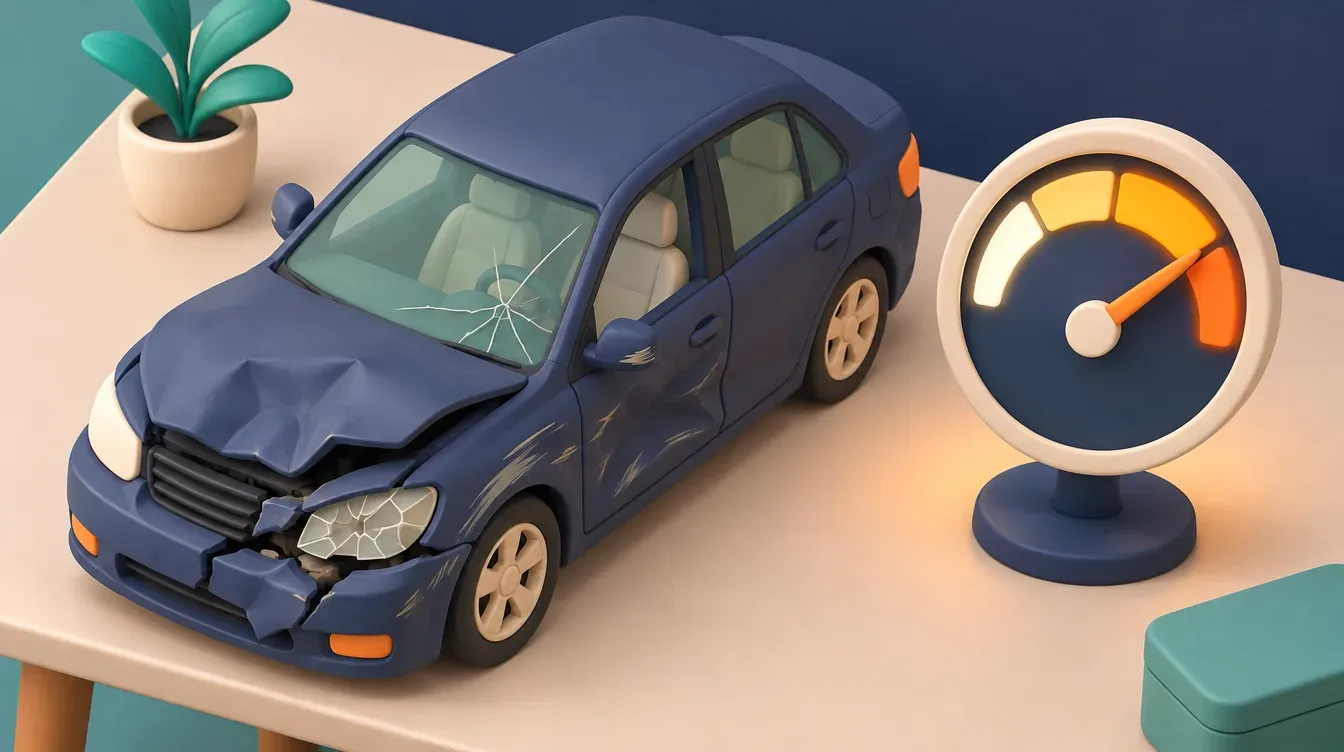
North Carolina’s total loss threshold is 75 percent. When the damage to a car, counting the original estimate and any supplements, “equals or exceeds 75 percent of the pre-accident actual cash value,” the insurer must declare it a total loss and pay you the car’s pre-accident value. That rule comes from the NC Department of Insurance (NCDOI) regulation 11 NCAC 04 .0418, and state title law uses the same 75 percent line to decide when a car becomes a salvage vehicle.
This page covers where the rule comes from, how the insurer must work out the payout, your option to keep the car, and what to do if the offer looks low.
What the rule is
Two separate North Carolina rules use the 75 percent figure. They do different jobs.
| Rule | What it says | What it controls |
|---|---|---|
| 11 NCAC 04 .0418(c), an NCDOI regulation | When damage “equals or exceeds 75 percent of the pre-accident actual cash value,” the insurer “shall designate the motor vehicle as a ‘total loss’ and pay the claimant the pre-accident value” | Whether the insurer must total the car |
| G.S. 20-4.01(33)d, a statute | A salvage motor vehicle is one where repairs “would exceed seventy-five percent (75%) of its fair retail market value, whether or not the motor vehicle has been declared a total loss by an insurer” | Whether the car gets a salvage title brand |
The total loss calculator applies both 75 percent tests to your car’s value and repair estimate.
The insurance rule was readopted effective Oct. 1, 2020, and a March 2026 report to the state Office of Administrative Hearings still lists that readoption as its latest action. NCDOI published the full text in a May 2020 memo to insurers, and the official codified rule on the NC Administrative Code site carries the same wording. Its consumer page, After an Accident, states the same rule in plain terms: at 75 percent of the pre-accident actual cash value (ACV), “the insurer shall consider the vehicle a total loss.”
Note the small difference. The insurance rule kicks in when damage equals or exceeds 75 percent of actual cash value. The title statute kicks in when repairs would exceed 75 percent of fair retail market value, using the NADA guide “or other publications approved by the Commissioner.” They are not the same test, so a car can be totaled by the insurer under one and still be judged under the other when it is retitled.
The rule also blocks games with the number. Paragraph (j) says no insurer, adjuster, appraiser, agent “or any other person” may agree to limit an original or supplemental claim to keep the repair cost below 75 percent.
How the payout is calculated
NCDOI says ACV “represents the local market value of the totaled vehicle.” If you and the insurer cannot agree on that value, rule .0418(d) says the offer must be based on:
- published regional average values for a “substantially similar” vehicle, meaning the same make, model and year, from recognized pricing guides such as the NADA guide or Kelley Blue Book; and
- the retail cost of two or more substantially similar vehicles in your local market area that are, or were within 90 days of the crash, available to buyers.
The “local market area” is a 100-mile radius of where the car is usually kept. If no match turns up, the insurer may widen the search in 50-mile steps. If none can be found at all, it may use quotes from two or more licensed dealers in the area.
The rule then lets the insurer adjust for condition, options, equipment and mileage, and subtract the cost of unrepaired damage from before the crash. Three more parts work in your favor:
- Tax and fees. Sales tax and registration fees are included in the ACV payment, except when you keep the salvage.
- Your evidence counts. The insurer must consider receipts, photos or other records showing the car was in better condition than its offer assumes.
- Show the math. Every deduction, including salvage and prior damage, must be itemized with its amount, and the documents behind the settlement must be shared with you. If you ask, the payment must come with a written statement listing the estimates, valuations and deductions used and their sources.
Total loss payouts: how insurers calculate actual cash value explains valuation reports in more detail.
Keeping the car
You do not have to give up a totaled car. NCDOI’s FAQ says: “You have the right to keep the salvage vehicle. When you do, the insurance company will deduct the salvage value from the actual cash value.” If you ask, the insurer must give you the name and address of a salvage dealer who will buy the salvage for the amount it deducted. That is a useful check on whether the deduction is fair.
Under G.S. 20-109.1, the insurer must ask whether you want to keep the car. If you do, you sign an owner-retained salvage form, the insurer sends it to NCDMV within 10 days, and NCDMV notes in its records that the car is a salvage vehicle. If you do not, you sign the title over to the insurer when it pays the claim.
Keeping the car has consequences. G.S. 20-71.3 says a car declared a total loss by an insurer licensed in North Carolina gets “TOTAL LOSS CLAIM” on its title and registration card, and a permanent doorjamb marker at its final inspection. Salvage and rebuilt titles in North Carolina covers inspections, retitling and selling the car later.
Towing and storage
Storage fees pile up fast while a totaled car sits in a lot. Rule .0418(n) says the insurer pays “all reasonable towing and storage charges until three days after” you and the storage facility are notified in writing that it will stop paying. Once that notice arrives, move the car or settle with the lot quickly.
What it means for you
- The 75 percent line is a floor, not a choice. At or above it, the insurer must total a covered car. Below it, the rule does not require a total loss.
- The offer must follow a method. An offer with no comparable vehicles, no itemized deductions or no tax included, when you are not keeping the car, does not match the rule.
- The rule is enforced by NCDOI. Paragraph (a) says NCDOI treats a failure to follow it as a possible unfair claim practice under G.S. 58-63-15(11) when the failure is “so frequent as to indicate a general business practice.” That makes a complaint to NCDOI the main lever, not a lawsuit based on the rule alone.
- On your own policy, you can use appraisal. NCDOI says that if you disagree with the amount on collision or comprehensive coverage, you and the insurer each pick an appraiser, the two pick an umpire, and “a decision by any two will be binding.” Each side pays its own appraiser and you split the umpire’s cost.
- On the other driver’s policy, the options are narrower. NCDOI says a third-party claimant can claim on their own collision coverage and let their insurer recover the money, or work with the other insurer’s appraiser. A dispute that persists may end up in court.
Flooded cars are judged by the same 75 percent rule; flood-damaged cars in North Carolina covers the extra title and safety issues.
What to do next
- Ask for the valuation in writing. Request the written statement of estimates, valuations, deductions and sources that rule .0418(i) gives you a right to on request.
- Check the comparables. Confirm each one is the same make, model and year, within the local market area, and listed within 90 days of the crash. Find your own listings if theirs look wrong.
- Send proof of condition. Receipts for new tires, recent major repairs and dated photos all count under paragraph (g).
- Check the tax line. If you are not keeping the car, sales tax and registration fees belong in the payment.
- Decide whether to keep the car before you sign anything, and ask for the salvage dealer’s name if you think the salvage deduction is too high.
- Use appraisal on a first-party claim if you still disagree.
- Complain to NCDOI if the insurer will not follow the rule. Its Consumer Services Division takes complaints online or at 855-408-1212. Claim delays and disputes in NC walks through the process.
If you are still deciding whether the car is worth fixing, Is my car totaled? and collision repair cost explain what drives a repair estimate. For the other state rules, go back to auto body repair in North Carolina.
Who to contact
- NC Department of Insurance, Consumer Services Division — Complaints about a total loss offer or how an insurer handled it. Toll-free 855-408-1212.
- NC Division of Motor Vehicles, vehicle title special cases (salvage) — Salvage titles and branded titles. NCDMV lists 919-615-3500 for salvage questions.
- NC General Statutes, G.S. 20-4.01 (definitions, including salvage motor vehicle) — Subdivision (33)d defines a salvage motor vehicle.
Frequently asked questions
What is the total loss threshold in North Carolina?
75 percent. Under the NC Department of Insurance's rule 11 NCAC 04 .0418, when damage, counting the original estimate and any supplements, equals or exceeds 75 percent of the car's pre-accident actual cash value, the insurer must designate it a total loss and pay the pre-accident value. State title law separately treats a car as a salvage vehicle when repairs would exceed 75 percent of its fair market retail value.
Full guide: Total Loss Payouts: How Insurers Calculate Actual Cash Value
Can I keep my car if the insurer totals it?
Yes. The NCDOI rule lets you keep the salvage. The insurer then deducts the salvage value from the actual cash value, and if you ask, it must give you the name and address of a salvage dealer who will buy the car for the amount it deducted. State law then requires the title and registration card to be marked TOTAL LOSS CLAIM, and a car damaged past the 75 percent line is branded as salvage.
Full guide: Salvage and Rebuilt Titles in North Carolina
Does the insurer have to include sales tax in a total loss payment?
Yes, in most cases. 11 NCAC 04 .0418(f) says applicable sales tax and vehicle registration fees are included in the actual cash value settlement, except where the claimant keeps the salvage vehicle. If your offer leaves them out and you are not keeping the car, ask the adjuster to explain in writing why.
What if I think the total loss offer is too low?
Ask for the written statement of the estimates, valuations, deductions and their sources, which the rule says the insurer must give you on request. Send records showing your car's condition, such as receipts and photos, and local listings for the same make, model and year. On your own policy you can invoke the appraisal provision. If the insurer ignores the rule, complain to NCDOI.
Full guide: Claim Delays and Disputes in NC: Timelines and How to Complain
Sources
- NC Department of Insurance, memorandum with text of 11 NCAC 04 .0418, .0419, .0421 and .0425 (May 6, 2020) — accessed November 24, 2026
- NC Office of Administrative Hearings, NC Administrative Code, 11 NCAC 04 .0418 Total Losses on Motor Vehicles (official text) — accessed November 24, 2026
- NC Office of Administrative Hearings, G.S. 150B-21.3A report for 11 NCAC 04 (submitted March 27, 2026) — accessed November 24, 2026
- NC General Statutes, G.S. 20-4.01, definitions — accessed November 24, 2026
- NC General Statutes, G.S. 20-71.3, branded titles — accessed November 24, 2026
- NC General Statutes, G.S. 20-109.1, surrender of titles to salvage vehicles — accessed November 24, 2026
- NC General Statutes, G.S. 58-63-15, unfair claim settlement practices — accessed November 24, 2026
- NC Department of Insurance, After an Accident — accessed November 24, 2026
- NC Department of Insurance, FAQs About Auto Insurance — accessed November 24, 2026
- NC Department of Insurance, Assistance or File a Complaint — accessed November 24, 2026
- NC Division of Motor Vehicles, Vehicle Title Special Cases — accessed November 24, 2026