How to File a Collision Claim, Start to Finish
Record the scene, report the claim to the right insurer quickly, get the car inspected, choose your shop and keep a paper trail until the check clears. Here is each step, with North Carolina timelines.
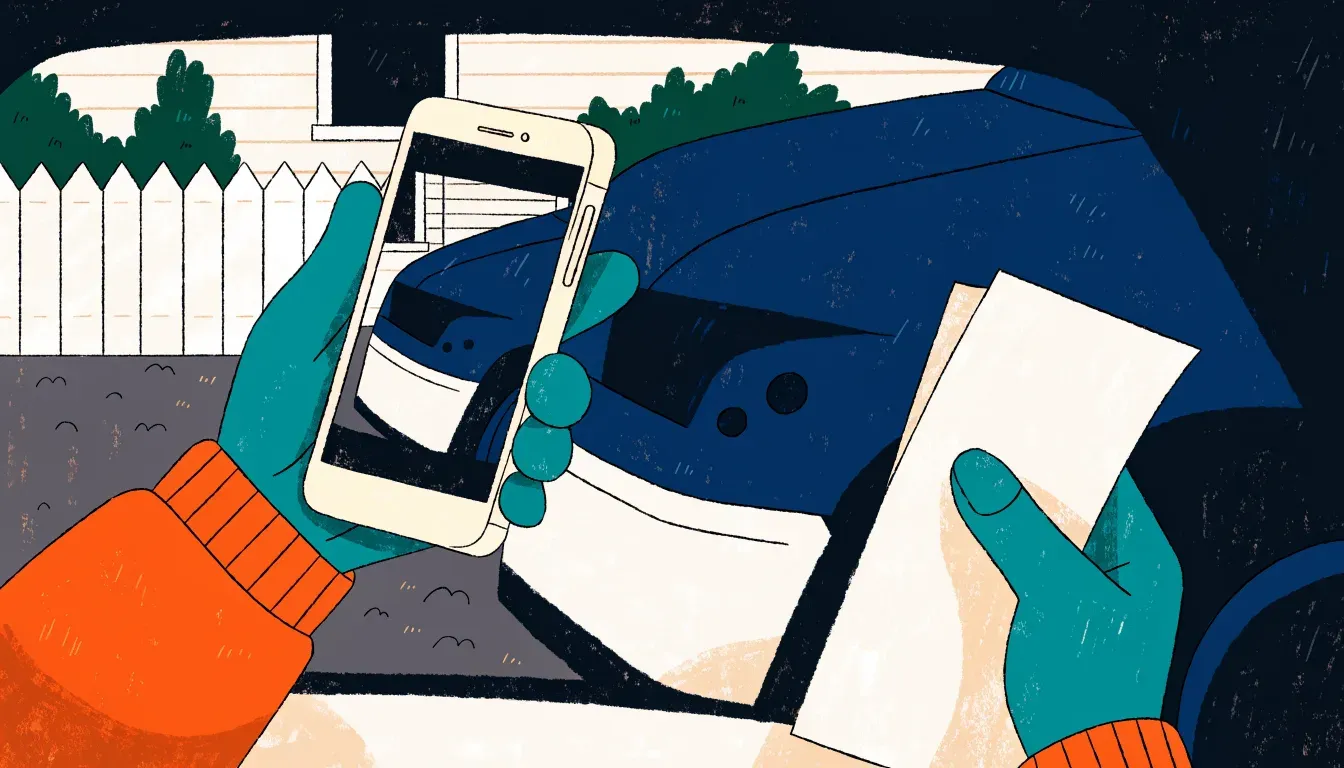
Key takeaways
- Report the crash to your insurer as soon as you can, even if it seems minor or wasn't your fault. If the other driver caused it, contact their insurer too.
- An adjuster inspects the damage and sets the amount. Hidden damage found during repair is added later through a supplement.
- In North Carolina, NC Department of Insurance says the insurer has 30 days to acknowledge a claim and should pay within 10 business days after it is settled.
- Keep a written record of every call, estimate and payment. It is your best tool if the claim stalls.
To file a collision claim, record the scene, report the claim to your insurer as soon as you can (and to the other driver’s insurer if they caused it), let an adjuster inspect the damage, choose your repair shop, and keep a written record until the final payment clears. Most of the work is the paper trail. This guide walks through each step in order, with the North Carolina timelines that NC Department of Insurance (NCDOI) publishes.
This is general information, not legal advice. Claim rules and deadlines vary by state and by policy. Auto Body Wilson is an independent guide, not a shop or an insurer.
Step 1: At the scene
NCDOI’s accident checklist starts with safety and information:
- Stop in a safe place. Move the car if needed to prevent more damage and keep traffic clear.
- Call the police, especially if anyone is hurt or it was a hit and run.
- Get the other driver’s details: name, address, phone number, license plate number, driver’s license number and insurance information.
- Copy the insurance company name and policy number exactly as they appear on the other driver’s proof of insurance card.
- Get witness names, addresses and phone numbers.
- Don’t agree to “forget about” the accident. NCDOI warns there may be hidden damage, injuries you don’t know about yet, or a lawsuit later.
The Maryland Insurance Administration adds: take pictures or draw a diagram of the scene, and write down the time, place and what happened while it is fresh. Get the police report number and the officer’s name. What to do after a car accident covers the first 48 hours in more detail.
Step 2: Report the claim
Call the claims number on your insurance card or use your insurer’s app. Triple-I says to do it as soon as possible, “regardless of who is at fault,” and even if the accident looks minor. Many insurer apps let you report the claim, upload photos, check your deductible, schedule an appraisal and reserve a rental car.
Which insurer to contact:
- You caused it: your own insurer, under your collision coverage.
- Someone else caused it: NCDOI says to contact your agent or insurer, and the other driver’s insurer as well. Their property damage liability coverage should pay for your repairs.
- Fault is unclear: report to your own insurer. In North Carolina, NCDOI notes that contributory negligence can bar you from collecting from the other driver if you were partly at fault, so your own collision coverage may matter.
Not sure whether to claim at all? Read file a claim or pay out of pocket? first. Even if you pay yourself, NCDOI lists notifying your insurer of “how, when and where the accident or loss happened” as a duty under North Carolina policies.
When you call, write down the claim number, the name of everyone you speak with and the date.
Step 3: Send what the insurer needs
Triple-I says insurers usually require a “proof of claim” form and, if there was one, a copy of the police report. NCDOI lists your duties after a loss as: report how, when and where it happened; give the names and addresses of anyone injured and of witnesses; cooperate with the investigation; and provide or authorize the records the insurer needs.
Ask these questions on the first call (Triple-I’s list):
- Does my policy have a time limit for filing claims and submitting bills?
- Is there a time limit for resolving claim disputes?
- Is there a deadline for sending more information?
- When can I expect the insurer to contact me?
- Does my policy pay for a rental car while mine is being repaired?
Step 4: The adjuster and the estimate
The insurer assigns a claims adjuster. The Maryland Insurance Administration notes adjusters may be company employees or independent contractors, and they may want to inspect the car. Some insurers will ask you to bring a drivable car to a claim center or to send photos.
The adjuster’s estimate covers what can be seen from the outside. Progressive says its estimate includes damage “we can see without taking anything apart.” That first number is a starting point, not a final bill.
North Carolina timelines
| What | Timeline (NCDOI) |
|---|---|
| Insurer acknowledges your claim | Within 30 days of receiving it. The acknowledgment must be an offer, a denial, a payment, or notice that the investigation is ongoing. |
| Insurer pays after settlement | Mailed or delivered within 10 business days after the claim is settled. NCDOI rule 11 NCAC 04 .0421(b)(1) sets this clock. |
| Denied claim | The insurer must give a reasonable explanation tied to the policy language or the law. |
Other states set their own clocks. The Texas Department of Insurance says Texas insurers must acknowledge a claim within 15 days and pay within five business days of agreeing to pay. Washington’s insurance commissioner says insurers there must approve, deny or explain a delay within 30 days, and respond to supplements within five days. Check your state insurance department for yours.
North Carolina also lists unfair claim practices in G.S. 58-63-15(11). They include failing “to acknowledge and act reasonably promptly upon communications with respect to claims,” failing “to affirm or deny coverage of claims within a reasonable time after proof-of-loss statements have been completed,” and not trying in good faith to settle promptly and fairly once liability “has become reasonably clear.” The statute covers conduct done often enough “to indicate a general business practice,” and it says a violation does not by itself give anyone but the Insurance Commissioner a cause of action. In plain terms, it is a rule the state enforces, not a basis for your own lawsuit.
Step 5: Choose your shop and approve the repair
In North Carolina, G.S. 58-3-180 says your policy must let you choose the repair shop. The insurer can recommend one, but it must tell you that you don’t have to use it. Rules in other states vary. See can your insurance company choose your body shop?
The North Carolina Motor Vehicle Repair Act gives you rights at the shop:
- A written estimate for work over $350, given to you before work starts, unless you waive it in writing (G.S. 20-354.3). It must also let you say whether to save the replaced parts, and state the daily storage charge once the repair is done.
- Notice of any charge for the estimate before the shop prepares it (G.S. 20-354.4).
- A call before the bill runs more than 10% over the estimate, so you can approve, change or cancel the work (G.S. 20-354.5).
- Inspecting removed parts, if you ask when you authorize the work.
Tell the shop who the adjuster is and give them the claim number. How to read a body shop estimate helps you check the shop’s figures against the insurer’s.
Step 6: Supplements during the repair
Once the car is apart, the shop often finds more damage. The Maine Bureau of Insurance says that when this happens, “the repair shop will submit an additional estimate to the insurer for approval.” Progressive says it reinspects the car when more damage turns up and calls finding it “not unusual.”
Ask the shop to call you when it sends a supplement, and to hold off on unapproved work. If the insurer won’t approve what the shop says is needed, see insurance estimate too low?
Step 7: Rental car
Rental coverage depends on your policy and on who was at fault. NCDOI says insurers commonly allow a rental during repairs but that no North Carolina statute or rule requires one. If you have rental reimbursement on your own policy, check the daily limit and the number of days. Tell the adjuster about repair delays as they happen. Rental cars during repairs covers who pays.
Step 8: Payment and pickup
The insurer takes your deductible off the amount it owes on your own policy. Travelers says it often pays repair shops directly with your permission. If the check comes to you and you have a loan or lease, the lender’s name may be on it too.
At pickup:
- Compare the final invoice with the approved estimate and any supplements.
- Pay your deductible to the shop, if the insurer paid the shop.
- Look the car over in daylight: paint color, panel gaps, lights and warning lights on the dash.
- Get the shop’s written warranty and keep every document.
If the car is a total loss
If repairs would cost too much compared with the car’s value, the insurer pays its actual cash value instead. In North Carolina, NCDOI says the insurer must treat the car as a total loss when repairs equal or exceed 75% of its pre-crash actual cash value. You have the right to keep the car, with its salvage value taken off the payment. See total loss payouts.
If the claim stalls or you disagree
- Put it in writing. Email the adjuster with your claim number, what you are asking for, and the date you need an answer.
- Use the appraisal clause for a dispute over the amount with your own insurer. NCDOI describes it: each side picks an appraiser, the two pick an umpire, and a decision by any two is binding.
- On the other driver’s claim, NCDOI says you can claim on your own collision coverage and let your insurer recover the money, or work with the other insurer’s appraiser to reach agreement.
- Ask your state insurance department for help. In North Carolina, NCDOI’s consumer services line is 855-408-1212, or file online. NCDOI says it can forward your complaint to the insurer and require a response, but it cannot decide who was at fault or what your claim is worth.
What to do next
- Start a single folder or note for this claim: claim number, adjuster’s name, every call and every estimate.
- Report the crash today if you haven’t, then get an estimate from the shop you choose.
- Read the insurance claims guide for how deductibles, supplements and payment fit together, and check what collision repairs cost for what drives the bill.
Frequently asked questions
How long do I have to file a collision claim?
It depends on your policy, and there is no single national deadline. Triple-I suggests asking your insurer whether your policy has a time limit for filing claims and submitting bills. Triple-I and NC Department of Insurance both point the same way: report the crash to your insurer promptly, and ask about deadlines on that first call.
How long does an insurance company have to pay a claim in North Carolina?
NC Department of Insurance says an insurer has 30 days after receiving a claim to acknowledge it, by making an offer, denying it, paying it or telling you the investigation is ongoing. It says payments should be mailed or delivered within 10 business days after the claim is settled. Other states set different timelines.
Should I file with my insurer or the other driver's?
If the other driver caused the crash, you can claim against their insurer, and NC Department of Insurance says you should contact them as well as your own company. Triple-I advises calling your own insurer too, regardless of who is at fault. If the other insurer stalls or disputes fault, you can claim on your own collision coverage and let your insurer recover the money.
Full guide: File a Claim or Pay Out of Pocket? How to Decide
What if the shop finds more damage after the insurer's estimate?
That is common. The shop sends the insurer an additional estimate, called a supplement, and the insurer reviews it, sometimes by reinspecting the car. Ask the shop to call you before doing any work the insurer has not approved. In North Carolina, the Motor Vehicle Repair Act also requires the shop to contact you if the bill will run more than 10% over its written estimate.
Full guide: Insurance Estimate Too Low? Supplements and How to Push Back
Sources
- NC Office of Administrative Hearings, NC Administrative Code, 11 NCAC 04 .0421 Handling of Loss and Claim Payments (official text) — accessed November 24, 2026
- NC Department of Insurance, After an Accident — accessed November 24, 2026
- NC Department of Insurance, FAQs About Auto Insurance — accessed November 24, 2026
- NC Department of Insurance, Assistance or File a Complaint — accessed November 24, 2026
- N.C. Gen. Stat. § 58-63-15, Unfair methods of competition and unfair or deceptive acts or practices defined — accessed November 24, 2026
- N.C. Gen. Stat. § 58-3-180, Motor vehicle repairs; selection by claimant — accessed November 24, 2026
- N.C. Gen. Stat. § 20-354.3, Written motor vehicle repair estimate — accessed November 24, 2026
- N.C. Gen. Stat. § 20-354.4, Charges for motor vehicle repair estimate — accessed November 24, 2026
- N.C. Gen. Stat. § 20-354.5, Charges in excess of repair estimate; inspection of parts — accessed November 24, 2026
- Triple-I, How to file an auto insurance claim — accessed November 24, 2026
- Maryland Insurance Administration, What You Should Know About Filing an Auto Claim — accessed November 24, 2026
- Maine Bureau of Insurance, Auto Claims — accessed November 24, 2026
- Progressive, Claims FAQ — accessed November 24, 2026
- Travelers, Your Deductible and Claim Payment — accessed November 24, 2026
- Texas Department of Insurance, Auto insurance guide — accessed November 24, 2026
- Washington Office of the Insurance Commissioner, What to expect when you file an auto insurance claim — accessed November 24, 2026