Independent vs Dealer vs Chain Body Shops: Which Should You Use?
Who owns a body shop tells you less than you might think. Here is what actually differs between an independent shop, a dealership collision center and a national chain, and when each one makes sense.
Key takeaways
- Ownership matters less than training, equipment and whether the shop follows your carmaker's repair procedures. Good and bad shops exist in all three groups.
- Carmaker certification is open to independents and chains in most programs, so a dealer badge is not the only route to a factory-certified repair.
- National chains' main practical edge is a warranty you can use at other locations. An independent's warranty usually works only at that shop.
- Chains and many independents work with insurers' direct repair programs. You can still choose any shop, and in North Carolina the law says so.
An independent body shop, a dealership collision center and a national chain can all do excellent work, and all three can do poor work. Choose on the specific shop’s training, equipment and carmaker certification, not on who owns it. For a newer car, an aluminum body or heavy driver-assistance tech, pick a shop certified by your carmaker, whatever its ownership. For an older car or cosmetic damage, a well-run independent is often the easiest fit. This guide is part of the body shops guide.
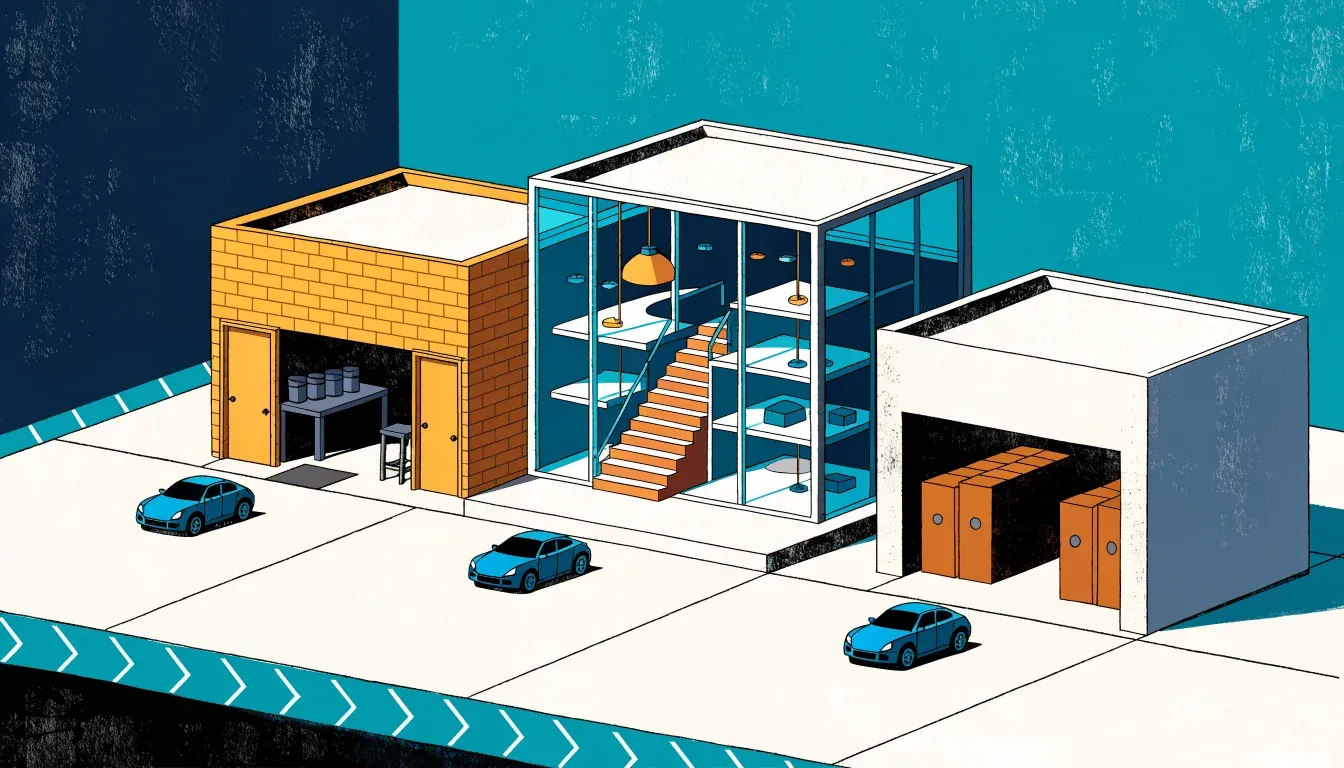
The three types
Independent shops are owned locally, usually one location or a small group. The owner is often on site. Some hold carmaker certifications. Many do not.
Dealer collision centers are body shops owned by or tied to a new-car dealership. Being at a dealer doesn’t automatically mean the shop is certified by the carmaker.
Chains come in two forms. Consolidators such as Caliber, Gerber, Crash Champions and Classic Collision own and run large networks of shops. Franchise brands license their name to local owners. Maaco’s warranty, for example, says “the Maaco dealer who performs the repair also issues the warranty.”
The chains are big and getting bigger. In early 2025, Focus Advisors counted 3,836 shops in the five largest groups, about 30% of the collision repair market (Repairer Driven News). Gerber’s purchase of Joe Hudson’s 258 locations closed in January 2026, and Focus Advisors’ mid-2026 review describes a “Big Four” (Repairer Driven News). It also noted “some of the very smallest independents quietly disappearing.”
How they compare
| Factor | Independent | Dealer collision center | National chain |
|---|---|---|---|
| Carmaker certification | Varies. Many programs are open to independents | Often for the dealer’s brands, but check | Many locations hold several, but it varies by location |
| Warranty reach | Usually that shop only | Usually that shop only | Often honored at other locations in the network |
| Insurer programs | Can be direct repair shops | Can be direct repair shops | Can be direct repair shops |
| Who you deal with | Often the owner | Service or collision manager | Location manager, plus a corporate customer line |
Certification: the factor that matters most
For newer cars, a carmaker’s certified collision program is the clearest sign a shop has the training and tools for your car. Ownership mostly doesn’t decide who can join:
- Honda and Acura: American Honda says its certified collision program is “open to all U.S. body shops including dealer-owned, independent and MSO group” (Honda and Acura Certified Collision). MSO means multi-shop operator.
- Nissan: Its shop locator lets you filter for “Dealer Certified Collision Center” and “Certified Collision Center” (Nissan), so both kinds are in the network.
- Ford and GM: Both require I-CAR Gold Class or Gold status, plus their own tools, equipment and training (I-CAR; GM).
- Toyota: This one is tied to dealers. In 2020 Toyota cut the required dealer stake in a certified collision center from 51% to 15% of the business operations (Repairer Driven News, Oct 2020). Toyota also said it was rolling out signage so customers wouldn’t mistake an uncertified dealer collision center for a certified one.
So “dealer” and “certified” are not the same thing, and “independent” doesn’t mean uncertified. Body shop certifications explained covers each program and how to check a shop’s status.
Warranty: where chains have an edge
A body shop warranty is only as useful as your ability to use it. National chains often let you go to another location:
- Crash Champions says its lifetime guarantee “is valid at any Crash Champions location nationwide.”
- Fix Auto USA says its limited lifetime warranty “is honored at any of our 200+ locations across the U.S.”
- Caliber requires warranty repairs at a Caliber facility. If you are outside Caliber’s market area, it can approve another shop in advance. Its warranty lasts as long as you own the car, but not less than 60 days, and can’t be transferred.
- Maaco says the center that did the work handles warranty issues. If you move more than 50 miles away, you go through Maaco’s franchise office to find another center.
An independent shop’s warranty usually works only at that shop. That matters if you move or travel often. The FTC reminds you that “there is no ‘standard warranty’ on repairs,” so read each one. Body shop warranties compares the terms in detail.
Insurer ties
Independent shops, dealers and chain locations can all be part of insurers’ direct repair programs (DRPs). The Insurance Information Institute describes a DRP as “a network of auto repair shops and dealerships approved by an insurer.” The III says DRPs “help auto insurers provide their customers with quality repairs at a reasonable cost.”
There is a trade-off. DRP shops agree to terms with the insurer, often including labor rates. In the 2026 Who Pays for What? survey, the median State Farm body rate was $62 an hour at DRP shops, against a $70 median for non-DRP work (Autobody News).
You don’t have to use a DRP. The Insurance Information Institute says consumers “are not required to use a direct repair program offered by their insurance company.” In North Carolina, G.S. 58-3-180 requires your policy to let you pick the shop. Direct repair programs explains the pros and cons.
Price
We could not find a reliable, like-for-like price comparison between independent, dealer and chain body shops, so we don’t give one. What moves the bill is the same everywhere: labor hours, labor rates by type, parts choice, paint and blending, and calibration. On a North Carolina claim, the amount the insurer decides is payable is the same whichever shop you choose. Get written estimates and compare them line by line. Collision repair cost shows typical price ranges.
Which to choose
- Newer car, aluminum body, EV or lots of sensors: a shop certified by your carmaker. That can be a dealer, a chain location or an independent. See high-end and EV body shops.
- You move often or drive long distances: a chain whose warranty works at other locations.
- Older car, cosmetic damage or paying yourself: a well-reviewed independent you can talk to directly.
- Insurance claim and you want it simple: your insurer’s DRP shop can be fine. Check its training and warranty the same way you would any other shop.
Checkbook’s 2026 surveys found some shops rated “superior” by at least 95% of their customers and others by fewer than 65%. That spread exists within every type, which is why the individual shop matters more than the label.
What to do next
- Check your carmaker’s certified collision locator for shops near you. Note whether each is a dealer, chain or independent.
- Add one or two well-reviewed local shops to make a shortlist of three.
- Ask each the questions to ask a body shop, including which certifications it holds for your make and what its warranty covers in writing.
- Pick the shop that answers best. How to choose an auto body shop has the full checklist. In North Carolina, the North Carolina guide covers your rights.
Frequently asked questions
Is an independent body shop as good as a dealer?
It can be. What matters is training, equipment and whether the shop follows your carmaker's repair procedures, not who owns it. Honda's and Nissan's certification programs are open to independent shops as well as dealer-owned ones. Ask any shop which certifications it holds for your make and look at a finished car before you decide.
Full guide: Body Shop Certifications Explained: I-CAR, ASE and OEM-Certified
Are chain body shops like Caliber or Gerber any good?
Quality depends on the individual location, as it does with any shop. Large chains often list many carmaker certifications and offer warranties honored at other locations. But program requirements apply shop by shop, so check the specific location you would use, not the brand.
Full guide: How to Tell If a 'Top Rated' Body Shop Is Actually Good
Should I take my car to the dealership body shop?
If the dealership's collision center is certified by your carmaker, it is a strong choice for a newer car. Don't assume it is. Toyota, for example, has used separate signage so customers can tell a certified dealer collision center from one that isn't. Ask for the certification by name.
Do I have to use my insurance company's body shop?
No. The Insurance Information Institute says consumers are not required to use an insurer's direct repair program. In North Carolina, state law requires your policy to let you choose the shop, and the insurer owes the same amount wherever you go. Other states have their own rules.
Full guide: Can Your Insurance Company Choose Your Body Shop?
Sources
- Repairer Driven News: Focus Advisors predicts 'significant' consolidation; 'Big Five' now hold 30% of market share (18 Feb 2025) — accessed November 24, 2026
- Repairer Driven News: Focus Advisors' Mid-Year Review: 'Different drivers, different gears' (24 Aug 2026) — accessed November 24, 2026
- Insurance Information Institute: FAQs about direct repair programs and generic auto parts — accessed November 24, 2026
- Autobody News: 'Who Pays for What?' survey, average median non-DRP labor rates (26 Oct 2026) — accessed November 24, 2026
- Honda and Acura Certified Collision (American Honda) — accessed November 24, 2026
- I-CAR: Honda Training (Honda & Acura Certified Collision requirements) — accessed November 24, 2026
- Nissan Certified Collision Repair Network — accessed November 24, 2026
- Toyota: Toyota Certified Collision Centers — accessed November 24, 2026
- Repairer Driven News: Toyota lowers dealer ownership threshold for certified auto body shops (6 Oct 2020) — accessed November 24, 2026
- GM Parts: General Motors Collision Repair Network — accessed November 24, 2026
- I-CAR: Ford Training (Ford Certified Collision Network requirements) — accessed November 24, 2026
- Caliber Collision: Terms and Conditions of Repair Services (limited warranty) — accessed November 24, 2026
- Crash Champions: Lifetime Warranty — accessed November 24, 2026
- Fix Auto USA: Warranty — accessed November 24, 2026
- Maaco: Warranty Policy — accessed November 24, 2026
- Checkbook: Find the Best Car Damage Docs (2026) — accessed November 24, 2026
- N.C. Gen. Stat. 58-3-180: Motor vehicle repairs; selection of repair shop — accessed November 24, 2026
- FTC: Auto Repair Basics — accessed November 24, 2026